
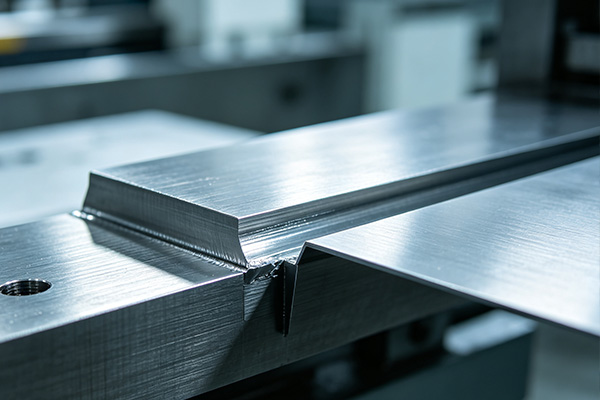
As manufacturing upgrades toward refinement, market requirements for the dimensional accuracy, surface quality, batch consistency and forming complexity of stampings keep rising, and the traditional extensive stamping model can no longer meet the needs of high-end components. Precision stamping production requires not only stable equipment and dies but also standardized process systems, scientific production flows and refined on-site management. Optimizing die design, standardizing process parameters, upgrading lubrication systems and improving inspection mechanisms can effectively balance stamping product quality, production efficiency and cost, helping stamping lines achieve efficient, stable, intelligent mass production.
The die is the core carrier of precision stamping forming, and die design and manufacturing accuracy directly determine workpiece forming quality and production stability. Good die structure design must balance forming accuracy, material utilization and service life. Up front, the strip layout should be optimized based on workpiece structure, with precise calculation of edge margins, pitch and forming parameters, and the sequence of punching, blanking, bending and drawing should be planned to avoid forming deviations from process conflicts. For complex stampings, an integrated compound die combines multiple operations, reducing secondary clamping and positioning errors and greatly raising efficiency. Die material should match the stamping material and production frequency; in high-volume scenarios, high-hardness, high-wear die steel with precision grinding and polishing ensures long-term high-precision operation and reduces later repair frequency.
Standardized control of process parameters is key to stable mass production. Stamping speed, pressure, dwell time and blank-holder force must be precisely tuned to the sheet material, thickness and workpiece structure, eliminating batch defects from arbitrary parameter changes. For drawing, blank-holder force should be in a reasonable range, conventionally 20%–30% of the total drawing force, effectively preventing wrinkling while avoiding excessive force that causes cracking and accelerates die wear. For bending, bending force and forming speed should be matched to sheet thickness—thin sheet formed at low speed, thick sheet with appropriately added pressure—with precise dwell time to improve springback and ensure accurate, uniform dimensions. All mass-production parameters should be logged to form a standardized process system, ensuring consistent parameters across batches and improving batch consistency.
A professional lubrication system is an important guarantee for extending die life and improving workpiece surface quality. Different sheet materials need dedicated stamping lubricating oil to avoid surface scratches, material corrosion and die wear from improper lubrication. Ordinary carbon steel and steel plate stamping suit oil-based lubricants, which greatly reduce friction between die and sheet and cut die wear; for corrosion-prone materials such as aluminum alloy and copper, water-soluble lubricants are preferred to ensure lubrication while avoiding oxidation, discoloration and corrosion. Automatic spraying equipment should be used in production to uniformly control oil dosage, ensuring even sheet lubrication and eliminating forming defects from local under-lubrication, improving surface finish, extending die life and lowering maintenance costs.
Intelligent inspection and process control are important supports for quality and efficiency. Traditional manual sampling has large errors, low efficiency and high miss rates, hardly meeting the mass-production inspection needs of precision stampings. Modern stamping lines can be equipped with machine vision inspection systems and in-line laser measuring equipment for real-time automatic detection of appearance defects and dimensional deviations, quickly identifying burrs, deformation, hole misalignment and surface flaws and giving timely warnings for correction. A digital production system records each batch's parameters, inspection data and equipment status, building a full-process traceability system and continuously optimizing processes through data analysis, forming a PDCA continuous-improvement loop that steadily raises production stability and yield.
Overall, the improvement of precision stamping mass-production capability is the combined result of die optimization, process standardization, refined lubrication, intelligent inspection and standardized management. As manufacturing keeps upgrading, the stamping industry should keep focusing on process innovation and detail control, abandoning extensive production in favor of a refined, standardized, intelligent production system to build high-precision, high-stability, cost-effective stamping products, continuously meeting the precision component supply needs of high-end electronics, automotive and intelligent equipment.