
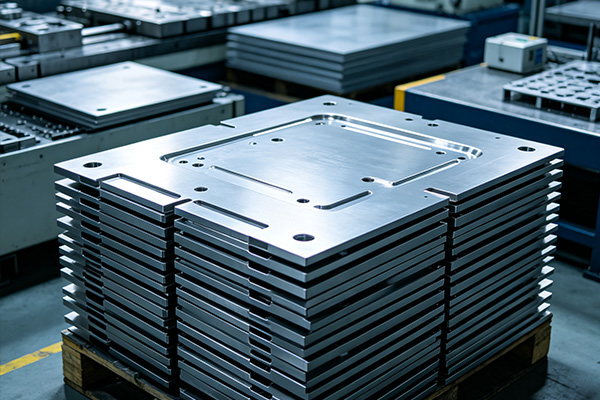
In the automotive manufacturing chain, stamping is the first of the four core manufacturing processes (stamping, welding, painting and final assembly). As the basic components of a vehicle, automotive stampings directly determine body structural strength, appearance accuracy, operating stability and overall vehicle safety. With the rapid development of new energy and intelligent vehicles, market requirements for the precision, quality, durability and light weight of automotive stampings keep rising; standardized production flows and scientific material selection principles are the key to guaranteeing stamping quality and meeting vehicle production needs. Today, automotive stampings are widely used in core parts such as body panels, chassis structural parts, interior support parts and electrical hardware, and are indispensable core basic components of automotive manufacturing.
I. Basic Definition and Forming Process of Automotive Stampings
Automotive stampings specifically refer to metal components produced to whole-vehicle production standards by stamping, bending, drawing, cutting and forming metal sheet with professional automotive stamping equipment and precision dies; they are the core basic components that make up the various assemblies and individual parts of a vehicle. Unlike ordinary civilian stampings, automotive stampings feature high precision, high strength, fatigue resistance, corrosion resistance and good batch consistency, fully matching the complex operating conditions and stringent safety standards of automobiles.
By the processing steps after forming, automotive stampings fall mainly into two categories with clearly divided workflows suited to different components. The first is directly formed stampings: after one or more stamping operations, their dimensions, appearance and performance already meet finished-product standards, requiring no secondary processing and going directly into vehicle assembly. These are mostly simple, dimensionally standard support and fastening parts that greatly improve vehicle production efficiency.
The second is deep-processed stampings: these components are relatively complex with higher assembly precision requirements, and stamping alone cannot meet vehicle standards. After stamping, several refined follow-up processes are needed, commonly including welding and splicing, precision machining, grinding and sizing, painting, rust prevention and electroplating. Secondary deep processing improves structural fit, appearance and corrosion/wear resistance; these are mainly used in core parts such as body appearance panels, load-bearing chassis structural parts and precision connecting accessories, ensuring vehicle safety and appearance.
II. Three Core Material Selection Principles for Automotive Stampings
Material selection is the core step in automotive stamping production, directly affecting the forming qualification rate, service life, safety performance and overall vehicle cost. The automotive industry has stringent, unified material selection standards, following three core principles: service performance, process performance and economic performance. The three complement each other and are all indispensable, achieving the optimal balance of quality and cost.
1. Service Performance First to Ensure Vehicle Safety and Stability
Service performance is the primary principle in selecting materials for automotive stampings; all raw material choices must first match the actual operating conditions and functional requirements of the components. Automotive parts fall into load-bearing structural parts, appearance panels, transmission accessories and protection accessories; parts in different positions have different requirements for strength, hardness, toughness, impact resistance, corrosion resistance, high-temperature resistance and fatigue resistance. For example, body and chassis structural parts need high-strength steel to ensure load-bearing and crashworthiness; body appearance panels need high-flatness, tough sheet to avoid deformation and cracking after forming; exposed chassis accessories should prioritize materials with excellent corrosion and oxidation resistance for complex outdoor driving conditions, safeguarding driving safety and long-term stability from the source.
2. Taking Process Performance into Account to Suit Mass Production
On top of meeting service performance, the selected raw materials must have excellent stamping process performance to suit the large-scale, high-precision automotive production model. Automotive stamping is mostly high-speed mass production, so materials need good plasticity, ductility and formability to smoothly complete drawing, bending, cutting and deep-drawing, without cracking, wrinkling, springback or deformation. Good process performance also supports later secondary processing such as welding, machining and painting, reducing processing difficulty, raising the forming qualification rate, ensuring the stability and consistency of batch production and matching the efficient pace of automakers.
3. Controlling Economic Performance to Optimize Mass-Production Cost
The automotive industry is a large-scale mass-production industry, so material selection must balance quality and economy under a scientific economic selection principle. On the premise of fully meeting service and process performance, priority is given to raw materials that are cost-effective, stable in supply and suited to mass production, avoiding over-specification that wastes resources and adds cost. Material utilization, processing loss and later maintenance costs are also considered; reasonable selection optimizes overall vehicle cost, helps automakers control mass-production costs, and balances product quality with market competitiveness.
III. Development Trends of the Automotive Stamping Industry
With the rapid iteration of new energy vehicles toward light weight, intelligence and high-end quality, the automotive stamping industry is undergoing a new upgrade. Conventional ordinary steel is gradually being replaced by light-weight, high-performance materials such as high-strength steel, aluminum alloy and composites, and stamping processes keep upgrading toward higher precision, intelligence and integrated forming. Stringent material standards and refined processing continuously raise the quality of automotive stampings, meeting new energy vehicles' needs for weight reduction, energy saving and safety upgrades, and steadily driving the automotive manufacturing industry toward refinement and high quality, becoming an important support for the upgrade of vehicle manufacturing.