
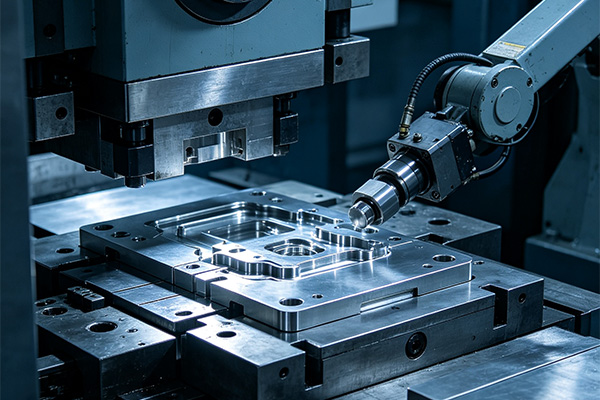
As the metalware manufacturing and precision processing industries iterate rapidly, market requirements for dimensional accuracy, surface quality and batch consistency of components keep rising. Precision stamping, an upgraded technology over conventional stamping, offers high precision, high surface finish, minimal secondary processing and efficient mass production, and is now widely used in high-end manufacturing such as electronics and electrical appliances, automotive parts, medical devices and aerospace, becoming one of the core processes for precision component forming. Compared with conventional stamping, precision stamping has more stringent technical specifications across process principles, equipment configuration, production standards and finished-product quality.
I. Core Process Principles of Precision Stamping Parts
Precision stamping, also called fine blanking, is a refined metalworking process optimized and upgraded from conventional stamping. Its core breakthrough is to replace the traditional tear-type separation with plastic shear forming. Through a number of precise control measures—optimizing the guiding structures of equipment and dies, minimizing the punch-die clearance, precisely controlling the counter ejector pressure and using a V-ring (tooth-lock) blank holder—the metal in the working zone is kept under a strong three-dimensional compressive stress state, effectively suppressing cracks and avoiding roll-over, burrs and fracture zones. It can perform precision stamping alone or be combined with bending, drawing and sizing to produce high-precision, high-flatness precision stampings in one pass.
Thanks to the unique three-dimensional compressive stress forming principle, the cut surfaces of precision stampings are smooth and vertical, with excellent flatness and very strong dimensional stability. Most parts need no secondary finishing such as cutting or grinding and can directly meet assembly requirements, greatly improving production efficiency.
II. High-Standard Technical Support Requirements for Precision Stamping Production
Achieving micron-level precision requires a complete, professional, high-precision production support system; the whole process is highly demanding on the compatibility of equipment, dies, raw materials and lubrication, none of which can be neglected.
On the equipment side, precision stamping requires a high-precision servo stamping press with positioning accuracy up to ±0.01 mm, paired with a high-precision servo feeder that keeps feeding error within ±0.02 mm, enabling stable low-speed, high-torque stamping, effectively avoiding material springback and misalignment and ensuring batch consistency.
On the die side, as the core of precision stamping, the die must use high-hardness, high-wear-resistant materials that are precision ground and polished, with accurately controllable punch-die clearance and stable, reliable guiding structures that maintain high-precision forming over the long term and reduce batch production errors.
On the material and lubrication side, precision stamping works with quality precision sheet such as cold-rolled steel, stainless steel, aluminum alloy and copper, whose flatness, hardness and toughness must meet precision machining standards; it also requires dedicated precision stamping lubricating oil to effectively reduce friction and wear between die and material, improve surface finish, extend die life and avoid scratches and deformation. This whole high-standard support system is the core guarantee of high-quality precision stampings.
III. Core Differences Between Precision and Conventional Stamping and Their Applications
Conventional stamping is a traditional basic metal forming process with a low technical threshold and low equipment investment, and a stable base-market demand. Its principle relies mainly on force-induced tear separation, which easily produces roll-over, burrs and irregular fracture surfaces; dimensional accuracy only reaches about IT14, with large flatness errors. Conventional stamping suits thicker substrates without complex cutting or fine drawing, mainly processing ordinary raw materials such as sheet and tube, and is better suited to general hardware parts with low precision requirements, smaller batches and no strict surface-quality requirements, meeting basic civilian and general machinery needs.
Precision stamping, by contrast, reaches accuracy grades IT6–IT9, holds dimensional tolerances within ±0.01 mm, achieves surface roughness as low as Ra0.8 μm and minimum hole sizes down to 0.6 times the material thickness—far better than conventional stamping. Its batch qualification rate can exceed 99.5%, material utilization reaches 80%–95%, and overall production cost is 30%–60% lower than with traditional fine machining. The finished parts are burr-free with flat cut surfaces and stable geometric tolerances, suiting mass production of all kinds of high-end precision components and perfectly matching the stringent standards of high-end manufacturing.
IV. Industry Value and Development Trends of the Precision Stamping Process
As manufacturing transforms toward refinement, high-end and intelligent production, the application scenarios for precision components keep expanding. Precision stamping combines high precision, high efficiency, low cost and large volume, overcoming the industry pain points of insufficient accuracy in conventional stamping and low efficiency in fine machining; it ensures high precision and consistency of components while enabling large-volume production, effectively balancing product quality and cost.
Precision stampings now fully cover core fields such as precision electronic terminals, automotive precision structural parts, medical device components and smart-device hardware. In the future, with continuing upgrades in die technology, intelligent stamping equipment and new material processes, precision stamping will move toward higher accuracy, more complex structures and full-process intelligence, becoming the mainstream process for high-end precision hardware forming and continuously empowering high-quality manufacturing development.